

How To Add Application In Startup Windows 10
Windows is designed to run applications and programs automatically every bit shortly as you sign in to your user account. Some apps are automatically gear up to run at this point, while others tin can be manually added. This is a great feature if you repeat sure tasks daily, such equally checking your email, opening a to-do document, etc.
When you perform a clean install of Windows, certain native applications are assigned to run as presently as you sign in. Here are a few common ones:
- Cortana
- OneDrive
- Microsoft Teams (Windows 11)
While some apps are added to support the motorcar-run characteristic, as they are installed on your organisation, such as the following:
- Skype
- Spotify
- Snagit
- Inter Driver and Support Assistant
Nonetheless, some applications are not automatically launched. These need to be manually added to Windows startup, so they start automatically as soon equally you sign in.
This article discusses how yous tin add certain apps and programs to the list and then that they launch automatically.
Table of contents
- What is Windows Startup Folder
- Startup Folder Per User
- Startup Binder for All Users
- How to Add Programs to Startup using File Explorer
- Add together Programs to Individual User Accounts Startup
- Add Programs to All User Accounts Startup
- Alternative Methods to Add Programs to Startup
- From Apps Folder
- Directly Inside Startup Folder
- How to Add together Programs to Startup using Task Scheduler
- How to Add Programs to Startup using Windows Registry
- Add together Programs to Startup for Individual User Accounts
- Add Programs to Startup for All User Accounts
- Disadvantages of Adding programs to Startup
- How to Disable Programs Auto Startup
- From Startup Binder
- From Windows Registry
- From Task Director
- From Settings App
- Closing Words
What is Windows Startup Folder
The "Startup" binder is a directory inside Windows that contains a list of apps and programs that will run automatically as soon equally the system boots upward. This is the kickoff place Windows looks to launch applications automatically.
With that said, there are 2 types of startup folders in Windows
Startup Folder Per User
As the names implicate, one of the startup folders defines the apps to launch automatically for a specific user account, whilst the latter defines the common apps and programs to launch automatically for all user accounts on the figurer.
The location for the Startup folder for individual users tin be found at the following location. You can open file location by copying and pasting information technology into the Windows Explorer accost bar.
C:\Users\Username\AppData\Roaming\Microsoft\Windows\Beginning Menu\Programs\Startup The data for these files is saved inside the Windows Registry on the post-obit path:
Computer\HKEY_CURRENT_USER\SOFTWARE\Microsoft\Windows\CurrentVersion\Run Startup Folder for All Users
In this folder, you will discover apps that automatically run on your computer for all user accounts. These are mostly native Windows apps, such as Cortana, OneDrive, etc
The location for the common Startup binder for all users can be found at the following location:
C:\ProgramData\Microsoft\Windows\Start Menu\Programs\Startup The data for these files is saved inside the Windows Registry on the following path:
Computer\HKEY_LOCAL_MACHINE\SOFTWARE\Microsoft\Windows\CurrentVersion\Run Each of these folders tin exist customized to add or remove apps that run automatically.
How to Add Programs to Startup using File Explorer
Add together Programs to Private User Accounts Startup
Let us at present show y'all how to add applications and programs to the Startup folder for individual user accounts so that they will launch automatically when you log in:
- Start by creating a shortcut for the app that you desire to run automatically. This can be done by right-clicking on an app so clicking Create Shortcut from the context menu.

- You may be asked to "create a shortcut on the desktop instead." Click Yes.

- Now, open the Run box past pressing the Windows Central + R shortcut keys on the keyboard.
- Type in the post-obit inside the Run box to open the Startup binder for your electric current user account:
shell:startup
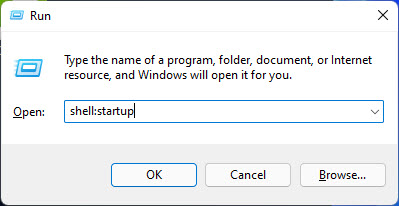
- The Startup folder will at present open using File Explorer. Drag and drib the shortcut you created in steps i and 2 above in this folder, or cut and paste information technology.
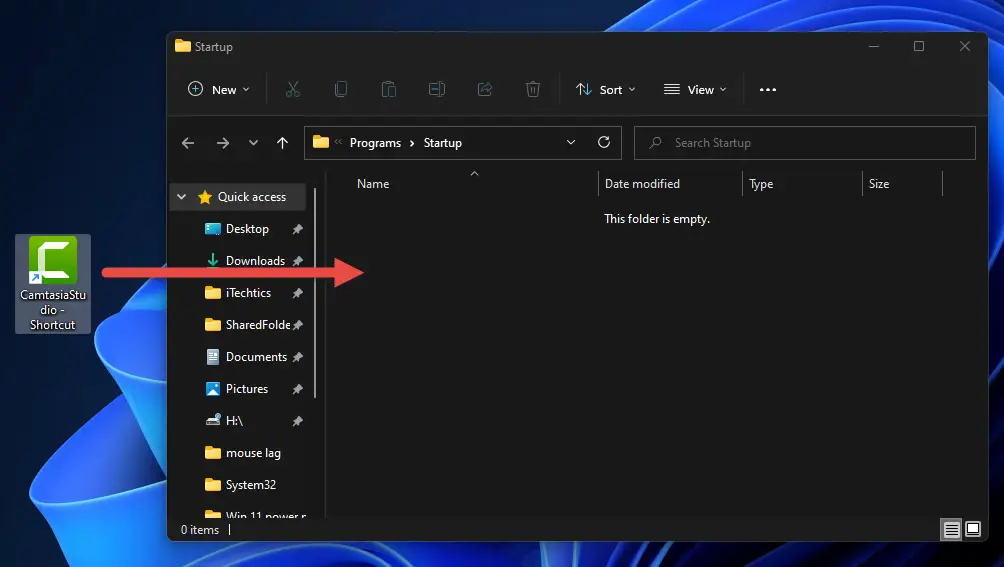
Now the next fourth dimension you lot sign in to this user business relationship, the app will launch automatically. You lot tin repeat the steps above to add more programs and applications.
Add Programs to All User Accounts Startup
Perform the post-obit steps if you lot desire to add an app or program to launch automatically for all user accounts on your computer:
Note: Perform these steps while logged in from an administrative account.
- Start by creating a shortcut for the app that you want to run automatically. This can be done by right-clicking on an app and then clicking Create Shortcut from the context menu.
- You may be asked to "create a shortcut on the desktop instead." Click Yes.
- Now, open the Run box past pressing the Windows Fundamental + R shortcut keys on the keyboard.
- Type in the following inside the Run box to open the Startup binder for your electric current user account:
beat:mutual startup
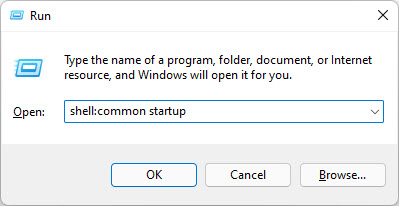
- The Startup folder, which is shared with all user accounts, will now open using File Explorer. Drag and drop the shortcut you lot created in steps 1 and 2 above in this folder, or cut and paste it.

The shortcut for the app pasted inside this folder will at present exist launched for every user on your PC.
Alternative Methods to Add Programs to Startup
The method of creating a shortcut for an app and so shifting it to the Startup binder is already discussed in the steps given above. However, there are more methods to do the aforementioned.
From Apps Folder
Shortcuts for some native applications, like the Reckoner, Agenda, etc. cannot exist created by using the conventional method discussed higher up. If yous do not find an app to add to the Startup list, await inside the "Applications" binder, which can be opened past typing in the post-obit in the Run box:
shell:appsfolder This will open a folder displaying all your current apps on the reckoner. Hither, right-click on the app you want to add to the Startup folder (either user Startup or common Startup) and click Create shortcut from the context carte du jour.
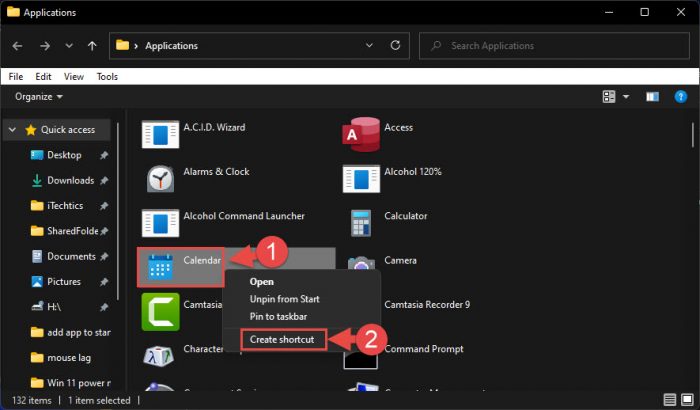
You will be asked to create a shortcut on the desktop instead. Create it in that location so move the shortcut to the corresponding Startup binder.
Directly Inside Startup Folder
You can also create a shortcut inside the Startup folder. Here is how:
Note: This method is only valid for calculation an app to the user-specific Startup folder since the Common Startup binder does not permit you to create shortcuts directly.
- Open up the Startup folder by typing in the following in Run:
shell:startup
- Inside the Startup binder, right-click on an empty space, expand New from the context bill of fare, and click Shortcut.

- From the Create Shortcut Wizard, click Browse and select the app you want to add to automatic startup. When selected, click Side by side.

- Now enter a name for the shortcut and click Stop.

The shortcut will now be added to the Startup folder and the selected app will launch each time you sign in to your account.
How to Add Programs to Startup using Task Scheduler
You tin can likewise schedule apps and programs to start automatically as soon every bit yous sign in to your account using the Task Scheduler Direction Console. However, this method just works for individual users, and non all the user accounts on your computer.
Perform the post-obit steps to schedule an app start equally soon equally you log in:
- Open the Job Scheduler by typing in taskschd.msc in Run.

- From the left pane, right-click "Task Scheduler Library" and then click Create basic job from the context bill of fare.

- From the Create bones chore sorcerer, enter a proper name for the chore and click Next.

- In the next window, select "When I log in" and click Next.
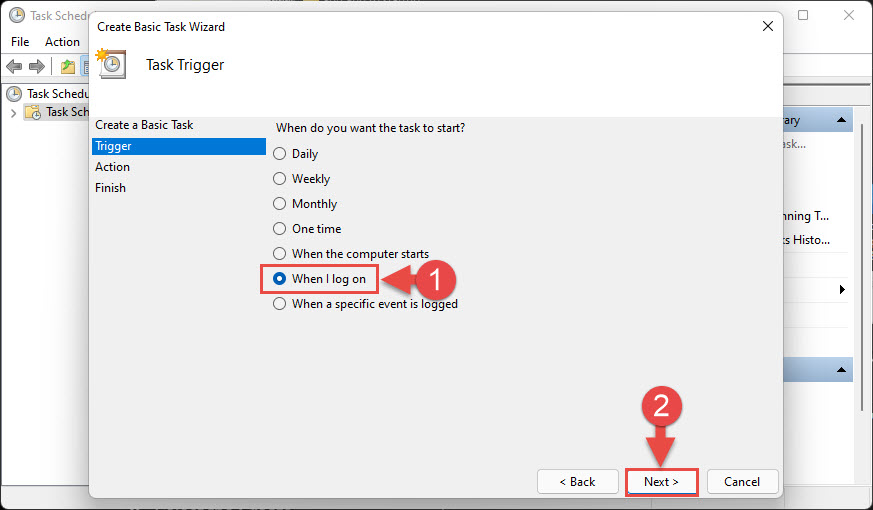
- Select "Start a program" and click Next.

- In the next window, click Browse and then select the app that you want to run automatically. When selected, click Side by side.

- On this screen, ensure all configurations are correct and click Terminate.

The selected application will now launch automatically each fourth dimension you lot log in to this user account.
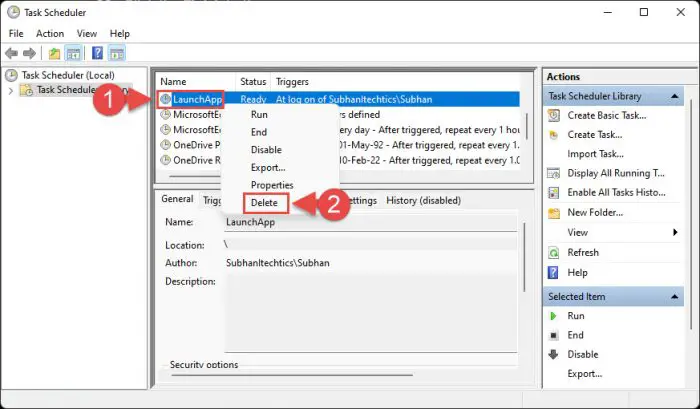
If you lot wish to remove the app from launching automatically, simply delete the chore from the Job Scheduler.
How to Add together Programs to Startup using Windows Registry
The methods discussed beneath involve manual changes to the Windows Registry. Misconfiguration of critical values in the system's registry could be fatal for your operating system. Therefore, we insist that you create a system restore point before proceeding with the process.
Add Programs to Startup for Individual User Accounts
The steps below guide you on how to add an app or program to the Startup list for individual user accounts using the Windows Registry Editor:
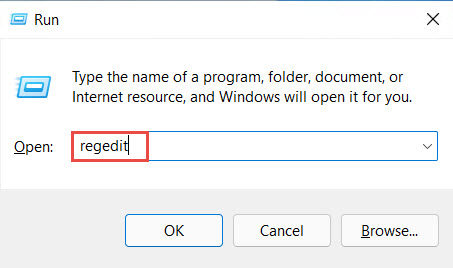
- Open up the Registry Editor by typing in regedit in Run.
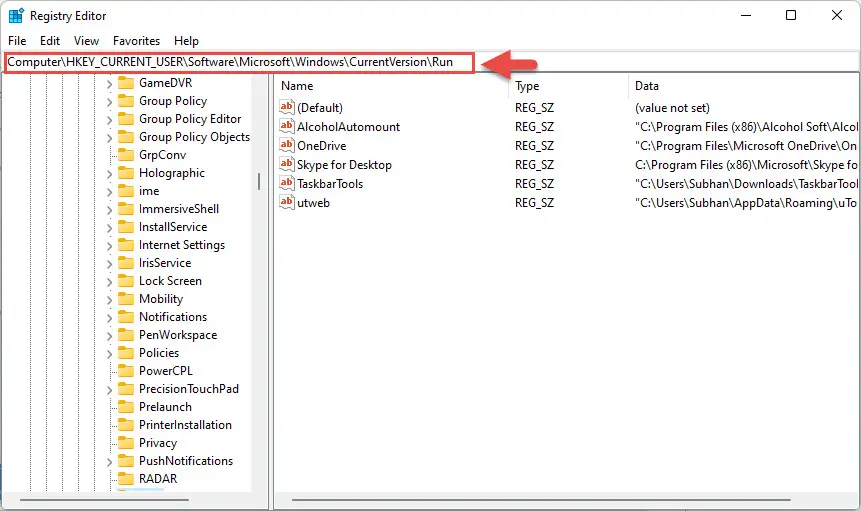
- Now paste the following into the accost bar at the top for quicker navigation:
Calculator\HKEY_CURRENT_USER\SOFTWARE\Microsoft\Windows\CurrentVersion\Run
- Right-click Run from the left pane, expand New from the context menu, so click String value.

- Name the string whatsoever you want. Information technology is recommended that you requite it a name so that it defines the program you are about to add to the Startup listing.
- Open the created new cord and enter the complete path of the app you want to run automatically under Value Data. Then click Ok.

- At present restart your figurer for the changes to take place.
When the figurer reboots, you volition see that the selected app will now run automatically.
Add Programs to Startup for All User Accounts
You can follow a similar procedure to add together an app for automatic startup in Windows with Windows Registry for all user accounts on your calculator. Here is how:
- Open the Registry Editor by typing in regedit in Run.
- At present paste the post-obit into the address bar at the top for quicker navigation:
Reckoner\HKEY_LOCAL_MACHINE\SOFTWARE\Microsoft\Windows\CurrentVersion\Run

- Right-click Run from the left pane, aggrandize New from the context menu, and and then click String value.

- Proper name the string whatever you want. It is recommended to proper name it something, so that it defines the program you are about to add to the offset listing.
- Open the new cord created, and enter the complete path of the app that y'all want to run automatically under Value Data. Then click Ok.
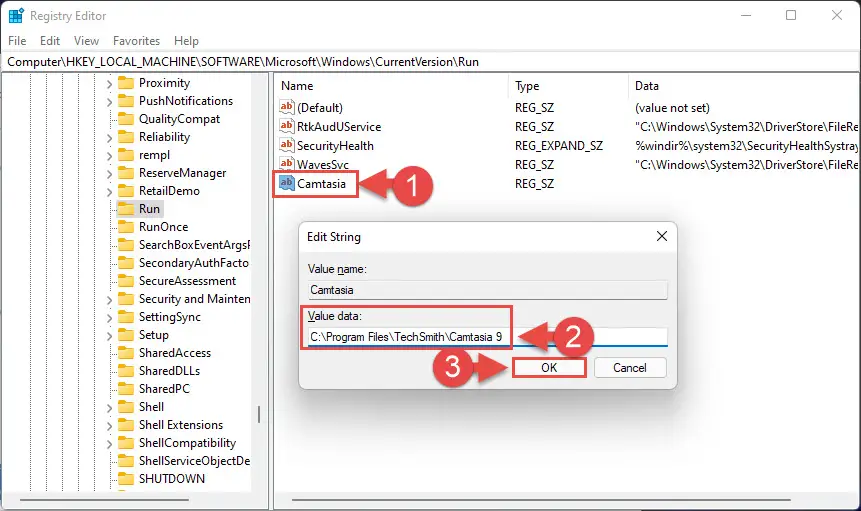
- Now restart your figurer for the changes to take place.
Disadvantages of Adding programs to Startup
You lot must already know the advantages of calculation applications and programs to the Startup folders in Windows. However, there is as well a drawback to doing so.
Apps that launch automatically volition effort and open simultaneously when the computer boots up. This volition exert a load on the system resources (CPU and RAM) which may touch other disquisitional Windows startups, such every bit background services and apps.
Therefore, adding more than apps to the Startup folders will increase the overall time it takes for your PC to become fully operational.
We suggest that you just add applications and programs for an automatic startup that are essential, and remove or disable all others.
How to Disable Programs Auto Startup
From Startup Folder
If you have manually added an app or program to the Startup folder for it to launch automatically, then it needs to be removed from the binder to foreclose that specific app from launching itself. It can be done using the following method:
- Blazon in the following in the Run box to open the corresponding Startup folder:
- For specific user:
shell:startup - For all users:
crush:common startup
- For specific user:
- Hither, correct-click on the app that you want to disable from launching automatically and click Delete from the context menu.

The app will now no longer launch automatically when you sign in.
From Windows Registry
If you lot previously added an app to launch automatically from the Registry Editor, then the respective registry will demand to be deleted to remove the app from launching at startup. Here is how:
- Launch the Registry Editor by typing in regedit in Run.
- Now paste the respective path into the accost bar at the top:
- For specific user:
Calculator\HKEY_CURRENT_USER\SOFTWARE\Microsoft\Windows\CurrentVersion\Run - For all users:
Estimator\HKEY_LOCAL_MACHINE\SOFTWARE\Microsoft\Windows\CurrentVersion\Run
- For specific user:
- Hither, right-click on the string value from the left pane and click Delete from the context menu.

- At present restart your figurer for the changes to take effect.
From Task Manager
You can disable applications from starting upward automatically through the Task Manager. Here is how:
- Open the Task Manager using the CTRL + Shift + Esc shortcut keys, and then switch to the Startup tab.
- Hither, select the app that you lot want to disable and and then click Disable from the lesser of the window.

From Settings App
To disable applications from launching automatically at Windows startup, perform the post-obit steps:
- Navigate to the following location:
Settings app >> Apps >> Startup - Here, toggle the slider in front of the app that you want to disable into the Off position.

This will at present forbid the app from starting automatically. If you desire to resume the feature, simply toggle the slider once again into the On position.
Closing Words
The automated Startup feature in Windows is sometimes a blessing in disguise, peculiarly if you lot use the aforementioned applications daily. Yet, you must utilise it wisely and only add together the apps and programs required, so it does not bear upon your system's performance.
If yous have many apps that showtime upwards automatically and are no longer in employ, we suggest that you lot disable them using any one of the methods discussed above in this post.
Also see:
Source: https://www.itechtics.com/add-app-to-startup/
Posted by: goodingpold1960.blogspot.com
0 Response to "How To Add Application In Startup Windows 10"
Post a Comment